


I found Ros Barber when I was falling down a Substack rabbit hole at an hour I should have been asleep, and not being able to click away from her story or her writing. She writes with the precision of someone who has spent her life close-reading other people’s sentences and the guts of someone willing to turn that same attention toward her own.
The thing that keeps pulling me into her orbit is that she survived more than a decade of psychological abuse and rebuilt her life from scratch. Ros doesn’t just show us the survival story, but what she built from the wreckage. She has spent a career studying how language creates meaning, conceals intention, and shapes the reality we live inside. She has also lived through the consequences of language being used to distort reality. She knows how to read a centuries-old poem for what is moving beneath its surface AND she knows how to recognize the manipulation hiding inside a sentence spoken by someone you love.
Ros also knows grief in the deep, all-encompassing way that I’ve come to know it. She has been writing about the death of her older brother since she was fourteen years old—in diaries, in poems, carried subconsciously into fiction, returned to across decades. Writing the facts. Circling the memory. Writing it and writing it and still feeling it swim in her body. Still, there was a threshold she could not make herself walk through.
In the essay she shares here, Ros returns to the door at the center of that memory—and to the fourteen-year-old girl standing outside it. What unfolds is a powerful meditation on grief, guilt, and the promises we make to ourselves in the immediate aftermath of loss, promises that can go on shaping our lives long after we have forgotten making them.
In our interview, Ros shares why she had to write this story more than once and what it took to remain present while writing what she calls “the hardest thing I ever wrote.”
She also talks about something that I think every memoirist needs to hear.
Tearing yourself apart on the page for what you didn’t do, couldn’t do, or wish you had done differently is not healing.
It only deepens the wound. Ros needed another way into the story. She found it by stepping outside the “I” and writing her younger self in the third person. From that distance, guilt began to loosen and she could finally offer herself the compassion she had been unable to receive from inside the memory. This is one of the most powerful moves available to us when writing the hard thing and one I often recommend to the writers I work with who are trying to process difficult material.
Go read it. And if there’s a story you’ve been trying to write from inside the wound, maybe try writing it from a few steps back.
Love, Loss and Self-Sabotage: The Silent Deal that Shaped My Life
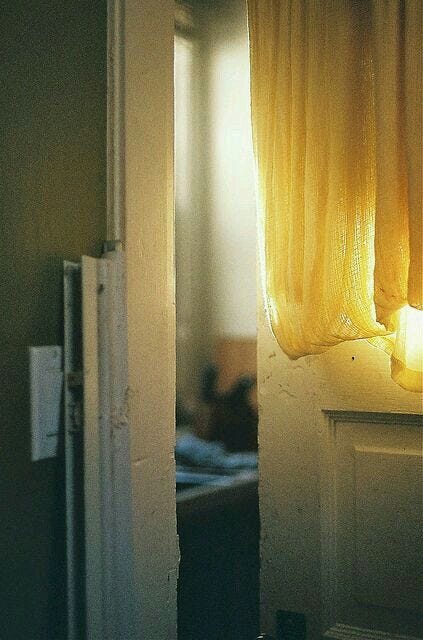
The girl is fourteen. She stands at her brother’s bedroom door, trying to hold herself together. He is in there, dying.
For days, she hasn’t seen him. For days, she’s been too scared to open the door. Several times, over several days, she’s stood there. It’s just Pete. She just has to knock.
But he’s dying. She doesn’t think she can hold it together. He needs her to hold it together. Sit beside him, watch telly with him, crack stupid jokes. He doesn’t need her crying, not now. But every time she gets to his door, the tears start. She cries, and she can’t go in.
The last time she saw him, that’s what did it. On the stairs, he looked like a skeleton. Skin over bone. He was gripping the bannister, trying to get himself up two floors to the bathroom. He wanted to do it himself. Didn’t want help. Didn’t want to shit in a bedpan.
But the cancer had wasted his muscles, those muscles he built as a rugby player, as a junior boxer. He could barely get himself up, step by step. That’s when she knew for sure she was going to lose him. Up until then, she could push it out of her head, even though the doctors had said before Christmas, six weeks. Even though it was six weeks now. That was the last time he got out of bed.
And now, each time she gets to his door, she cries. Which is not what he needs. The last thing he needs is her leaning on him for comfort, which she’s done for years. Like when she left home, stayed out all night on a doorstep, and nobody noticed. She sought him out at his Saturday job, cutting cheddar at the deli counter of British Home Stores. He served her brotherly advice. Called her ‘Sis’. The only person in the family who actually liked her. Who was always there for her, if he wasn’t out drinking, dancing, driving his metallic blue Mini. Soon he wouldn’t be there for her or anyone.
He needs her to be brave, and she’s failing.
She hears his music through the wall that separates their bedrooms. It used to be Ian Dury, Gang of Four. Now it’s Carol King’s ‘You’ve Got a Friend’, over and over: the song that is going to make her cry forever. And Elton John’s ‘Song For Guy’, which will play out his coffin. These are the songs that comfort him as he dies on morphine.
A few weeks ago, he could still get upstairs to the kitchen. He was writing a song. He said there was something wrong with his electric guitar. Sparks, he said. Sparks that looked like insects, crawling all over the neck and the strings. But it wasn’t the guitar. It was the morphine.
When he was diagnosed, at sixteen, with Ewing’s tumour — was operated on, had bone removed from his hip — had radiotherapy, chemo, lost all his hair — they gave him a seventy per cent chance of survival. Seventy per cent seemed hopeful. The doctors said it was a childhood cancer. If you live to eighteen, you’ll live to eighty. Taking them at their word, she’d been counting down to his eighteenth birthday. He was seventeen years and ten months old when the secondaries were found.
*
She never does open that door while her brother is conscious.
She never does go in to see him.
Instead, he comes to her in a dream. For some reason she doesn’t understand, they are standing by a swimming pool. He kisses her strongly, full lips. An unusual kiss. She wakes up, feeling perturbed. She goes to school.
Throughout the day, she thinks about that kiss. Sitting on the floor in the sports hall in her PE shorts, it dawns on her what it felt like. It felt like goodbye. She asks to be excused. The teacher must sense this is real; doesn’t ask for a reason. She changes fast, with shaking fingers. Runs home through the snow-whitened lanes in her yellow hat and gloves, her yellow scarf streaming behind her. She sees herself like this, from the outside. Like a girl in a film. When she turns the corner into her road, their Mum is standing at the open door. Her brother has been in a coma since last night.
Finally, the girl can go into his room. Now it doesn’t matter that she’s crying. She sits by his bed, the lower bunk. Next to his bed, an apple core. The last thing he ate. A cigarette butt in an ashtray he stole from their local. She takes the butt, slides it into the empty Rothman’s packet. She’ll keep it, that last thing that touched his lips.
His breathing rattles. The gaps between breaths lengthen. There’s a faint smile on his lips. She tells him she loves him, which she never could say to his face.
Her Mum comes in. It’s someone else’s turn. She goes upstairs. While she’s eating a bowl of cereal, he dies. That night, she babysits for a neighbour, as agreed. The next morning, she goes to school. She’s afraid to stop pretending everything’s normal. Afraid of the howling gap. Six days after his death, she turns fifteen.
She writes the facts neatly in her lockable page-a-week diary. Messy emotion spills into her ‘extra’ journal: the exercise books she keeps for that purpose. She writes in colour-coded felt tips: red for anger, blue for sadness. She writes so furiously that it burns through the pages.
I will never get over this.
I will never get over this.
I will never get over this.
*
The girl is me, of course. Decades ago.
And I only discovered it recently when, in the aftermath of losing my beloved job as a creative writing lecturer, tapping (with Emotional Freedom Technique) into the pain of redundancy, I said, “I choose to thrive.”
I choose to thrive.
But why was this making me cry? Why was emotion rising again, a wall of sadness I could barely fathom? The answer surfaced. Peter. What was it to do with Peter?
And then I realised. I had made a pact with myself, when Peter died, that I would not thrive. That I would NEVER RECOVER from his death. Because I had lost him, and if I thrived anyway, that would mean, in some sense, he didn’t matter to me, that I didn’t feel the loss of him. Teenage logic. Locked in for decades.
And haven’t I been a good sister? In my early twenties: financial success but an emotional mess. Three years of good money before sinking myself into an abusive marriage that would strip away everything. Ever since I left, dragging three kids in my wake, I have also dragged debt. As soon as I’ve had some success, I’ve backed off and failed to capitalise. I flirt with visibility — something happens — I dive into obscurity.
Always striving, not thriving. There was something I couldn’t see or name, always holding me back, an invisible chain. And in that moment, I found it.
This was huge. I tapped and tapped and wept. Undid the vow. Undid the pact I made with myself not to thrive. It made total sense! Time and again, I have held myself back at the brink of a life I dream of. Yet Peter would want me to thrive.
I undid the pact. I said, Even though Pete died, and I miss him, I choose to thrive in health, wealth and happiness. I tapped and tapped until it felt released.
Double bonus: I decided not to kick myself for only just finding out. I suspect the timing is perfect. Striving to survive led to my becoming a polymath as I thrashed about, looking for release from my self-created bonds. I got a Biology Degree. Learned programming. Became a therapist. Did a PhD in English Lit, and learned critical thinking. Wrote a poem that is studied by thousands. Wrote a prize-winning novel. Became an academic, publishing in three different disciplines. Got very good at teaching. And of great significance, had a spiritual awakening. Supported my kids and their friends and their partners. Kept my second marriage together for nearly a quarter of a century and counting. Paid all of the bills, for six of us, for twenty years.
Had I not been strangling my success, had I won through earlier, I wouldn’t have half of these strings to my bow. I would have much less to offer the world.
Here we are, humanity in crisis. A world that would have sunk me years ago, but now? I can swim. Can teach others to swim. Right now is the perfect time to release the pull-pin that allows me, at last, to thrive with momentum. Because this is the time my accumulated skills are most needed.
*
Some love is for a lifetime. The absence of the person you love feels like torture. We should not forget that St. Valentine was tortured. That his love for humanity endured — that he sent a letter of love to his torturer’s daughter. And don’t we all understand? Love is the most powerful driving force that exists. It is who we are, at our centre. It is what we were born to be.
If anyone seems like the opposite of love, they are lost. For whatever purpose they serve: to shake us out of complacency, to help us clarify the world we want, they have cut off from the heart of themselves, in a spiritual fugue. But they can’t conquer love. Because love endures even through death.
It is time that we who are not lost turn up the love so that others can find us and join hands. It is time to find the rusty old pull-pins that keep us from thriving and release ourselves into the flow.
Look for yours. Give it a tug. This is me, signing off, sending love.
**A version of this piece was published on my Substack, How to Evolve, on February 14th, 2025, here. It’s the piece I chose for Jessy’s “On Writing the Hard Thing” because I think, without question, it’s the hardest thing I ever wrote.
What is the “hard thing” at the center of this piece—for you, personally, not just on the page?
I have written about ‘not going in’ more times than I can count. That ‘sin of omission’ – not going into my brother’s room for the last few days of his life – has haunted me for decades. I’ve done numerous processes to release that guilt and feel compassion for the girl who didn’t make it across the threshold. I’ve written about it over and over again (starting at the time it was actually happening), trying to ‘exorcise’ it somehow, but nothing made me feel okay about it. None of the versions I’ve written before, whether as poetry or prose, really expressed how it felt for me. None of them contained all the moving parts. There was so much that built up to that threshold failure. How to capture the essential heart of it in a few hundred words?
With this piece, I feel like I finally wrote the definitive piece about it. It feels like I won’t need to write it again. Writing in the third person was what gave me the necessary distance. ‘The girl’ became a character I could feel so much more compassion for, because I was freed of self-blame. It wasn’t ‘me’ who failed to enter her brother’s room. It was a 14-year-old girl in a desperate place, unable to hold in the pain that she knew was essential for the normal banter-level conversation that he needed from her at that point. How vital it seemed not to expose him to her weeping.
The hardest thing when you are writing memoir about something you deeply regret, and wish you could have done differently, is not tearing yourself apart for it in the writing. There is no healing to be had there. You are only deepening the wound. Third person was the answer. And I had tried it before, but this time, I guess, I had done enough inner work to write the thing that told the truth.
What helped you regulate, or at least be present, while writing this piece?
For the last nineteen years, I have relied on Emotional Freedom Technique (EFT) aka ‘tapping’. It’s been the key to healing from so many difficult wounds in my past, as well as sometimes unmanageable emotions in my present. It’s my go-to for daily emotional regulation and has helped me release and recover from a great deal of pain.
I wept through the first several hundred words almost constantly, reading aloud and tapping as I did; the best method I have both for writing hard things and for using those words to heal the damage. Writing is, in itself, therapeutic, but reading the words aloud and tapping as you cry takes you to a deeper level of relief and insight. I don’t think you can beat it for emotional clarity and the onset of peace.
What changed for you after writing it, if anything (internally or externally)?
After writing it, I really felt I could finally let the grief over my brother’s death go. It has been a long, long time of carrying. Decades. I let some of it go when I wrote my second novel, Devotion, when I realised that the protagonist’s inner struggle with bereavement (which I hadn’t planned!) was my subconscious’s way of getting me to break through my own. But there was still this vow not to thrive that I was carrying around with me that I hadn’t even noticed. It was actually an EFT session which brought me that insight and led me to writing this piece… and then more tapping to clear it. After that, have I thrived? Well, I’m doing better than I was, though there are many years of self-sabotage to make up for! I’m having to forgive myself for those too. The elephant can only be eaten bite by bite.
For someone standing at the edge of their own hard story, what would you want them to know?
Write it as many times as you need to get down to the emotional truth. Sometimes, as well, the literal truth doesn’t hold it. In the five years after my brother died, I wrote hundreds of poems trying to encapsulate my grief, and none of them satisfied me until I changed an important fact about his funeral: I needed the metaphor of him being buried, rather than cremated. The reality of his mortal remains being ash or smoke, just vanishing somehow into the air, didn’t have any of the resonances that I could write about. Then one day I was cycling past the new estate they had built over the quarry where he used to fish: it had been filled, and they’d built houses on it, with little gardens, freshly-turfed. It made me realise how much time had passed since he’d died (five years) and how all my memories of him associated with people and places were being ‘built over’. I remembered how he used to warm maggots (which he kept in the fridge) by putting them in his mouth for a few seconds so they would wriggle on the hook. And I wrote, “cousins of maggots you warmed in your mouth now swim, hookless, through your [visceral representation of a corpse I shan’t go into! I was young, and shocking myself into acceptance]”. That poem finally had the emotional resonance I was looking for. It felt emotionally true, even though I had changed a key fact (and it ended up being shortlisted for a prize and being published, so it wasn’t just me that it resonated with).
Sometimes you have to come at a story obliquely, that way. Or by writing about it in the second or third person, treating the ‘you’ that went through it compassionately, like you would a young person in your care, your friend, a son/daughter, a niece/nephew.
It’s very healing when you write down the version of the story that feels emotionally true. It closes the loop that grief keeps open. It’s worth the pain of writing it, to really put that pain down in the text, and leave it there. Not only do you not have to carry it anymore, but other people can feel it, connect to it, and feel less alone. And if it makes them cry, maybe they are letting go of a little of their own grief, too.
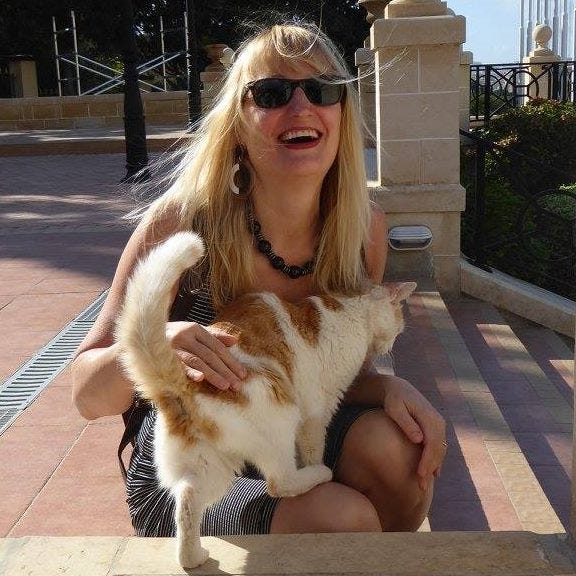
Ros Barber is a writer of fiction, non-fiction and poetry. Her critically acclaimed verse novel The Marlowe Papers (2012), a fictional reimagining of the life of Christopher Marlowe, longlisted for the Women’s Fiction Prize, was the winner of the Desmond Elliott Prize and joint winner of the Author’s Club Best First Novel Award. Her second novel Devotion (2015) was shortlisted for the Encore Award. Her collections of poetry include How Things Are on Thursday (2004) and Material (2008), a Poetry Book Society recommendation. Her poems have appeared in numerous anthologies including Faber’s Poems of the Decade (2012) and Penguin’s The Poetry of Sex (2014). She has taught creative writing for three decades. She writes on Substack at How to Evolve and is launching The Manuscript Club for novelists-in-progress.
Where to find Ros:
Website | Substack | Buy Her Books
