
Taking One Small Step Toward the Thing You Love. And Then Another (November Wrap-up)
On thresholds, tides, and the soft rewiring of a month made of water

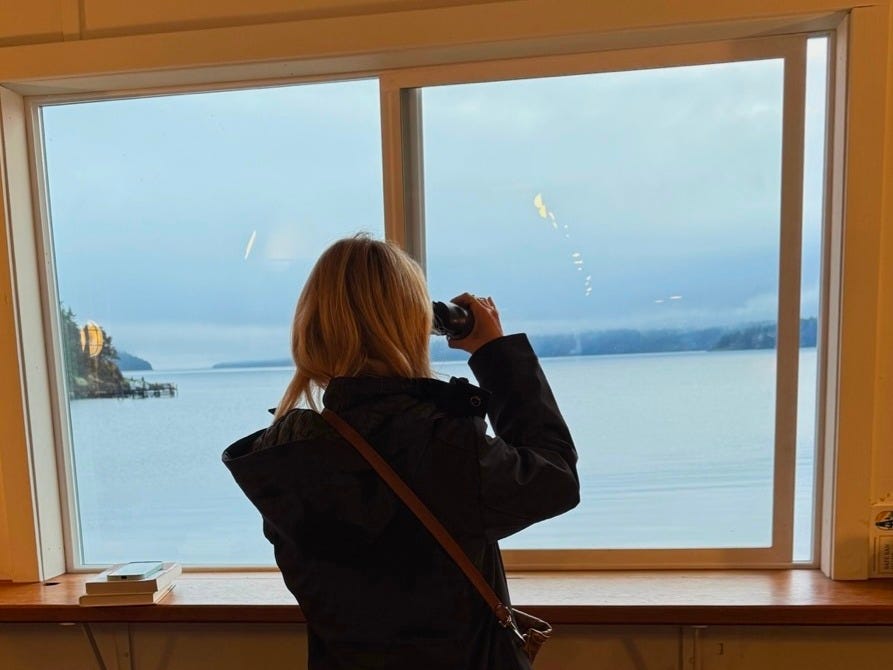
November was waking up to tall pines and quiet and feeling cradled in the deep gray embrace of Orcas Island. It was kimchi risotto and the moss-carpeted path to the great blue heron and sucking the Salish sea from my fingers. It was warm hugs from strangers and conversations from the places we’ve buried and learning how to hold the life I want. It was my son’s bed head in the blue-fog dawn, and the unexpected peace of standing inside the void instead of fleeing it. It was grieving every leaf that fell and trying to gather them all from my sky before they hit the ground. It was my uncle visiting from England, the two of us talking for hours over a cup of tea gone cold, and the way gratitude for him tangled with the grief of everything I once had and lost with my father. It was the black sea, black sky, black night after a healing of sound and arriving with no other intention but to be (or find) myself. It was drinking lattes in a penny lane coat and 16-hour travel days to an island of water and magic and knowing I would do it all over again in a heartbeat. It was stripping everything away from my life up to the last fifteen minutes on Earth and finding that for once I am not the one doing the holding—I am the one being held. Is that what it takes for me to allow myself to be loved? It was a postcard blooming with poppies that led me to my future and teaching a room full of writers how to breathe their way into their story to find out where the truth lives. It was waiting for the tea to steep and curling up with my dogs in their bed and matching my breath with theirs. It was sunset persimmons on my tongue in the morning and crying in the rain and waiting for the sea to give me an answer. It was brushing shimmer eyeshadow over my eyes and stacking rings on my fingers just like my mother used to do, and wondering how much of the cycle has been broken. It was rosemary old-fashioneds and a dear friend saying yes to love and sitting on bales of hay around a campfire. It was beginning and ending every day swallowed by the salt and sky, and knowing there is no other way I want to live my life. It was writing at the edge of the water and filling my pockets with rust-colored stones and pressing wildflowers into rain-soaked pages. It was almost forgetting my father’s birthday and thinking, what does it matter anyway, when did we become the sort of relationship that gets checked off a list? It was buttery pie crust that flaked and melted in my mouth and homemade birdseed ornaments and stringing rainbow lights around the Christmas tree. It was watery hot chocolate and parades of decorated tractors down Main Street and loving and hating the simplicity of it all. It was pockets full of poems and leaning into my gifts, my way of turning darkness into light, my way of bringing safety into rooms where there was none. It was writing our fears into power on sticky notes and dance parties and sweaty group hugs that I will remember forever. It was hot soaking tubs overlooking the island and ferry rides in the darkness and communing with the sea birds. It was a friendship blooming over a car ride, talking about where we go when we dream, what waits for us at the river, and how sometimes giving up the fight for the people you love is the only way to save yourself. It was stepping out again and again into a life I don’t yet have, hoping it will catch me. Will it catch me?
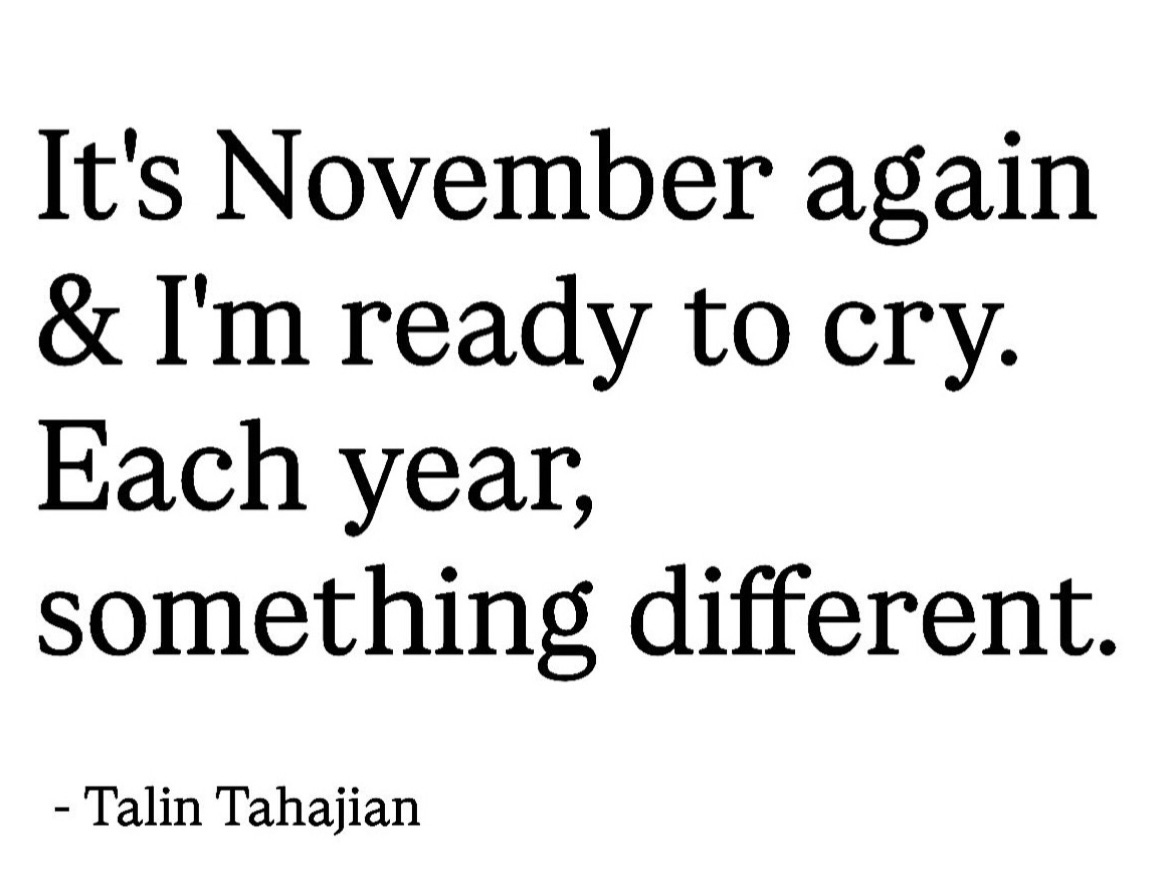
It’s the last day of November, and I’m already late starting this—late in the way writers are always late, circling the work they claim to love instead of entering it. Before I even begin, I’ve clicked through an ungodly number of open tabs, skimmed half a dozen Word docs—each one a different project, essay, pitch, proposal, poem, dream, list, distraction. I can feel myself avoiding the writing, the way we all do when something inside us is shifting shape.
So instead of writing, I spent most of the day with my son, wandering the gray, wet cold of our mountain town. The sky felt low and heavy, like a blanket pulled over our shoulders. The trees stood winter-bare—skeletons posed against a season that hasn’t officially arrived. We drove down the one main strip, parked by the slick-brick sidewalk, and slipped into the few shops open on a Sunday.
I’d meant to bring our notebooks and pens to write at the cafe, but I left them on the kitchen table because earlier I was distracted, stalled in the doorway watching songbirds flitter in the trees in search of the seed ornaments my son and I made for them on Thanksgiving. Gingerbread people and hearts and dinosaurs strung up with twine, disappearing under small, urgent beaks. It only took them a day to find them hanging from the branches, and the joy of it—this tiny feast in the rain—was enough to make me lose track of everything else.
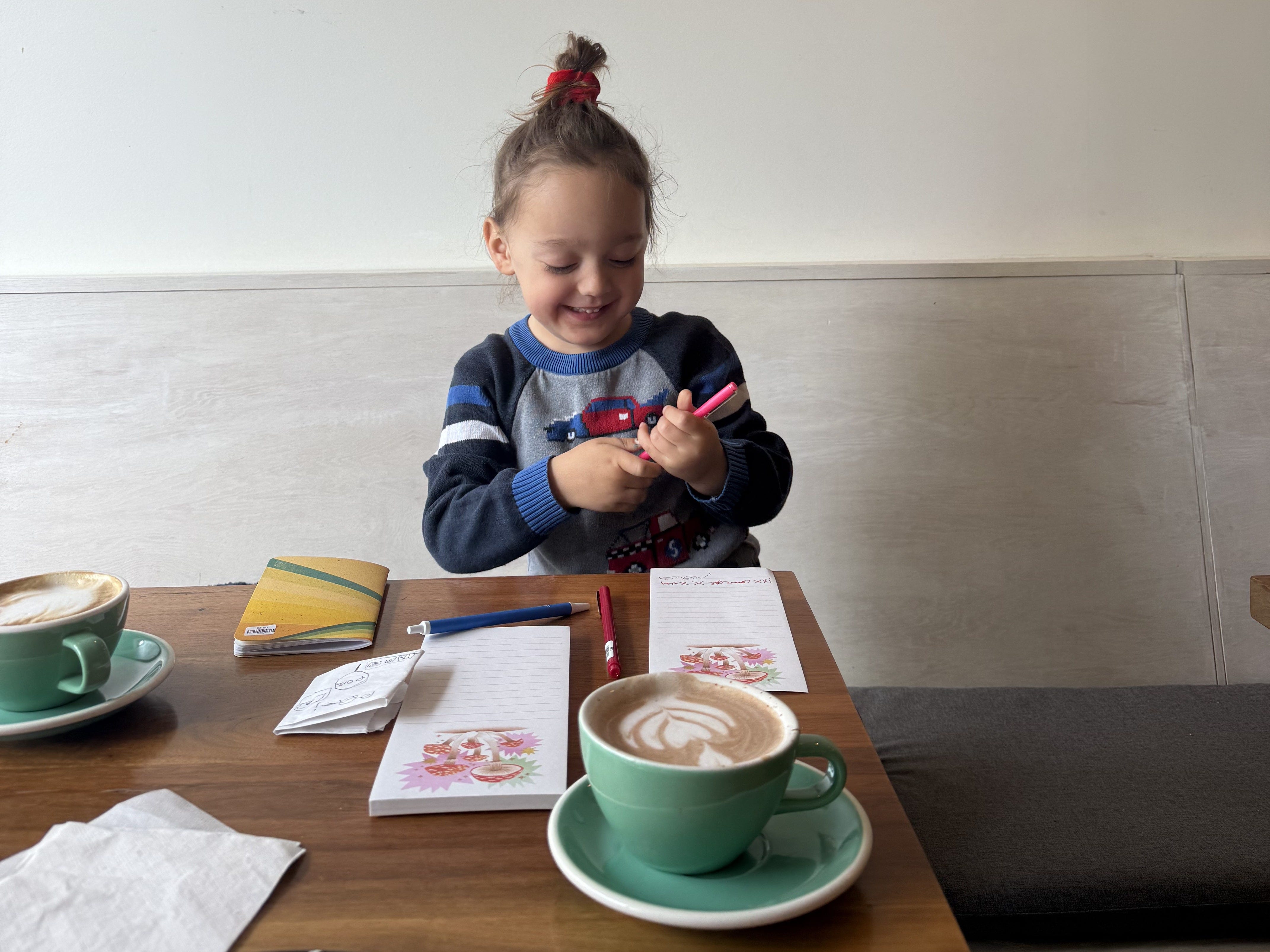
We ducked in and out of stores and the misting rain, searching for the things we needed to write. My son picked hot pink and red pens from the shop with the giant fake bear out front—the one he hugs every time we pass, a ritual he’s kept since he first learned to walk. Then we found a pocket-sized notebook and fridge-magnet notepad from the fungi-themed store that sells tarot cards and crystals and wood-wick candles.
We went to the cafe and he ordered his own hot chocolate, and then turned the notepad pages into tiny books by folding them four ways. He wrote stories and comic-book style poems and it reminded me of Shin Yu Pai’s haiku comic book, Less Desolote. He wrote about dreams and hospitals and records and monsters.
I tried to write too. I wanted something creative to shake loose, but all that came out were to-do lists, half-thought Substack ideas, and the dark jagged places I still need to face in my shadow. I found myself writing about how, no matter what I do, I still feel like a fraud, like I’m only pretending to be a writer, y’know? As if this whole life I’ve built around words is an elaborate game of make-believe. After all this time, why is it still so hard to fully hold the truth of my own work? There’s a whole essay brewing in that question, but at the cafe I had only one small scrap of paper to contain all my doubts and the inner critic’s relentless commentary. I was sinking into it when my son leaned over, looked at my scribbles, and asked, “What’s your poem about, Mommy?”
I didn’t have the heart to tell him it wasn’t a poem at all, just a list of the ways I trip myself up. So I said, “I don’t know yet, baby. I’m still figuring that out.” Then I tore off the page and began again, trying to write something about endings—how I feel on the edge of so many of them, unsure of what, exactly, is closing or what might begin in its place.
One thing I know for sure is that November is ending, and maybe that’s the real problem. I’ve spent most of the year looking toward this month, and now it’s slipping away. Earlier this year, I was asked to teach at Write Doe Bay, a writing retreat on Orcas Island. Jenn, the founder, had followed me on Instagram, read my memoir here, and reached out. I said yes immediately. I’m talkin’ no hesitation, just a full-body yes. And somehow the whole year felt like a slow, steady preparation for that moment. Now that it’s over, I feel a little disoriented. Ungrounded. Like, okay… now what? What am I actually supposed to be doing with my one wild and precious life?
I’m reading Wintering by Katherine May, trying to teach myself how to soften into winter—how to rest, how to let December be a month of not-doing. I even told my therapist a couple of weeks ago that I wanted the end of the year to be about integration, not excavation. No new digging, no unearthing old wounds. Just… being. She nodded, kindly, in that way therapists do when they know you don’t actually mean what you’re saying. And she’s right, I’m someone who’s always reaching for the next thing, growing, learning, stretching. I don’t really know how to just be.
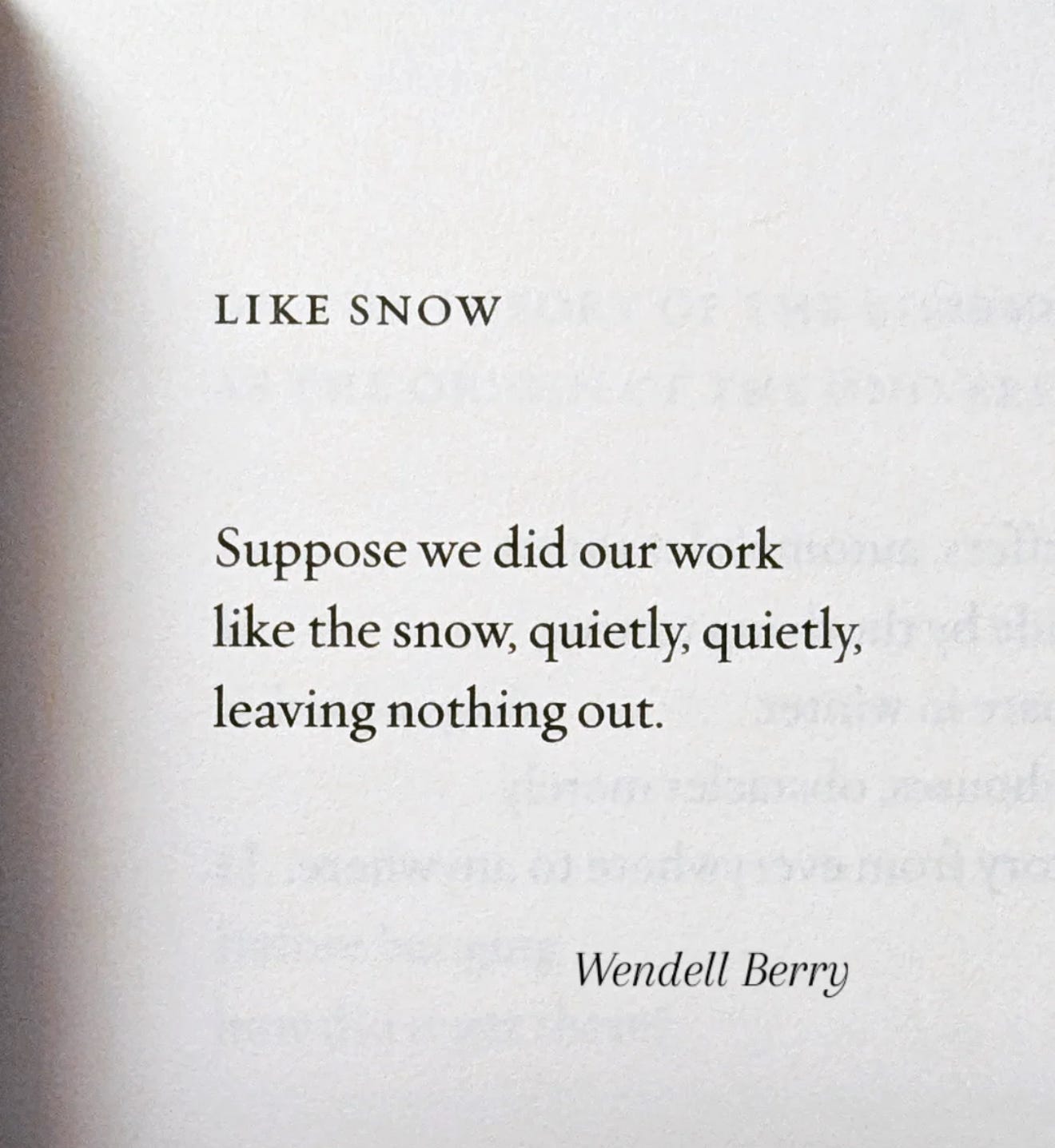
This year stretched me in more ways than I expected. I published my memoir here (I still can’t believe we’re more than halfway through it), hosted writing circles, taught workshops, showed up on Substack Live for Write the Hard Thing, sent my son to school (his choice, not mine), spent October in Lisbon and Amsterdam, and did so much internal work I feel like I’ve lived three lives since January. And through all of it, I kept feeling like everything was leading me to Write Doe Bay. Like every risk, every small expansion, every brave thing I did was preparing me to be there—to teach and to learn and to soak up whatever magic Orcas Island had waiting. Even sending my son to school felt connected as it expanded my capacity to be away from him. Five days—the longest stretch of our whole life. It felt like it was all in preparation, and yet nothing could have prepared me for how nourishing the experience would actually be. How beautiful the island is. The friendships. The opportunities. The way I stretched into a bigger version of myself.
It took sixteen hours of travel—two planes, three car rides, and a ferry—to get there. I arrived in the kind of darkness that feels swallowed whole, where you can’t tell what’s land or sea, what’s sky or water. I crawled into bed with stale plane air still clinging to my hair and skin and fell asleep without any sense of what I’d wake up to.
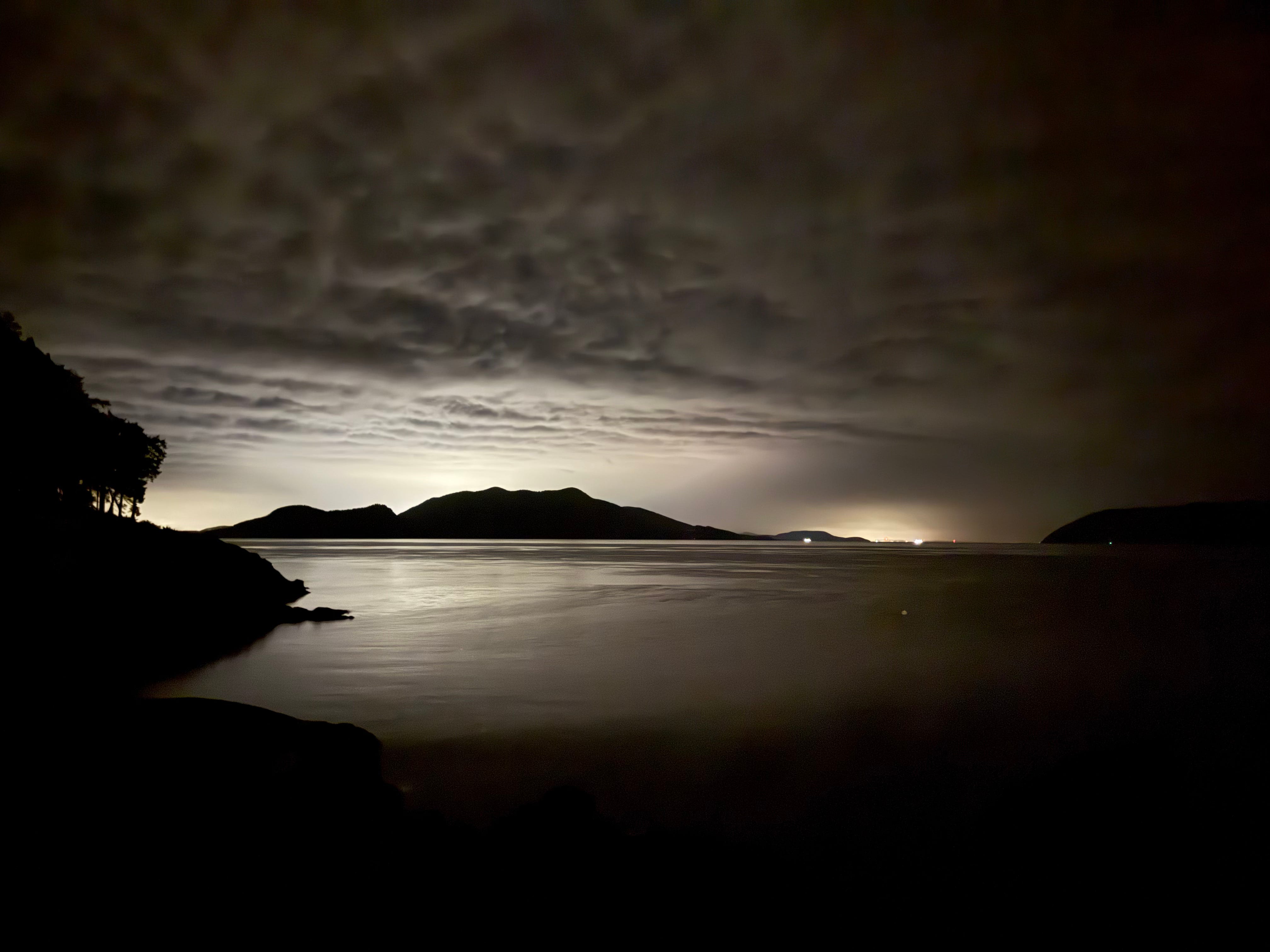
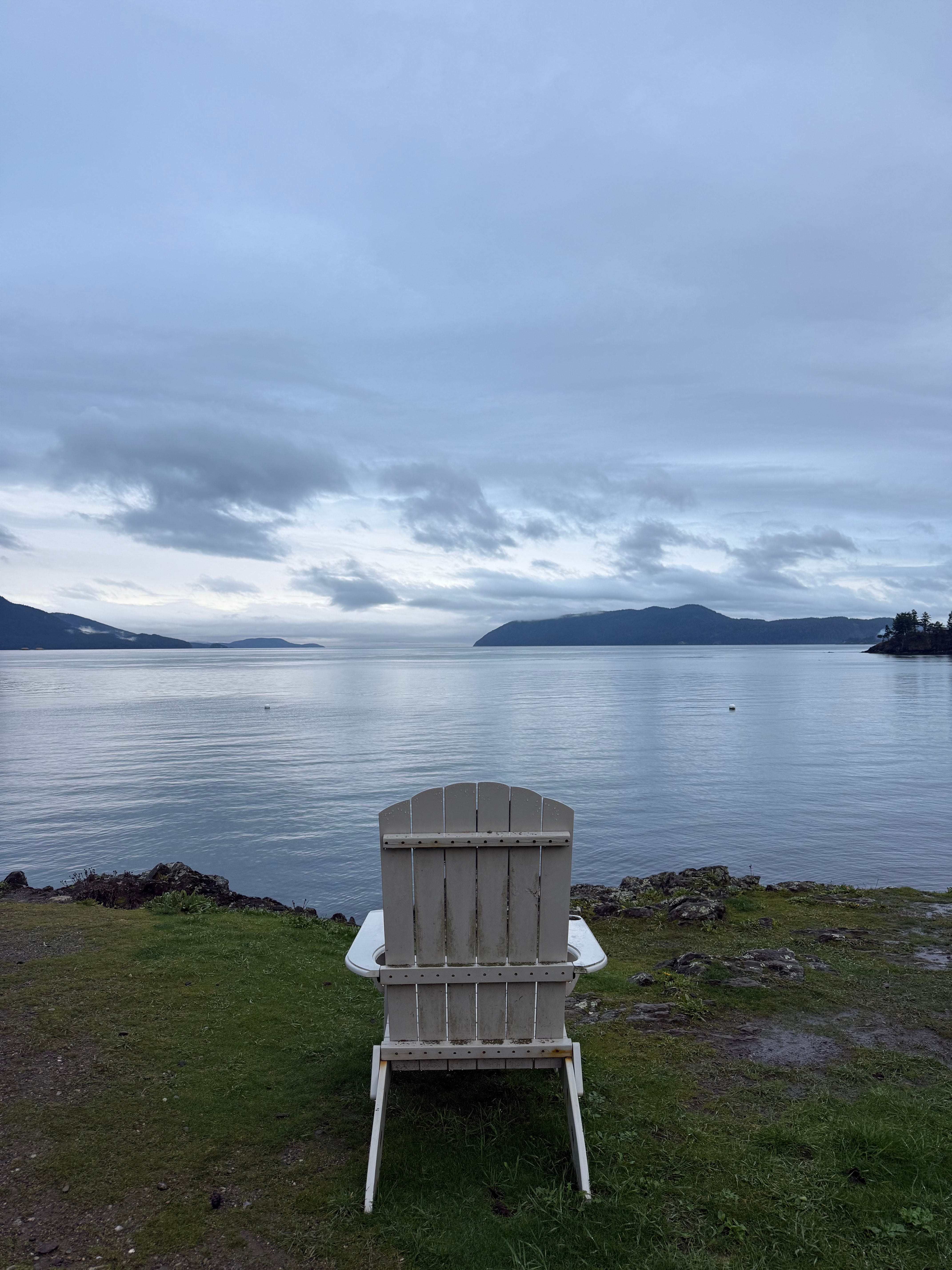
In the morning, I opened my door to tall pines, wet air, and dark blue water stretching out like a mouth I suddenly wanted to live inside. I sat in a rain-dampened chair on a cliff, looking out at the seam of sea and sky, and cried for two hours because it was all just so damn beautiful. I held my notebook in my hands, unopened, because I couldn’t bear to look down.
The next day, I sank into a room full of courageous humans opening themselves to the work of writing their hard stories. I held space for the shame and fear and grief that surface when we finally name the things we’ve been too afraid to say. We breathed together and created something from our heartache and our rage, from the sheer heaviness of being alive. And somehow, we made our way through it, each of us finding a new way to hold our stories, a new way to put them down when we need to. By the end, we felt lighter as a collective, as if the room itself had exhaled.
It was my first time teaching this workshop in person, and honestly, I had no idea how it would go. I only hoped people were into breathing, because if nothing else, we were going to damn well breathe. But we did more than breathe.
This room of writers, none of whom I knew, brought their whole hearts to the page. From seventeen to seventy, they disempowered their shame and invited their fear to sit beside them. They wrote about rape, about losing their children, about schizophrenia, abuse, neglect, resentment, suicide, motherhood, caring for aging parents, addiction, injury, death, loss—all the ways life strips something from us, or piles something on again and again until we can barely catch our breath.
I was in awe of their bravery, their grit, their willingness to go exactly where it hurt. Even the fiction writers made something out of this session. I guided them to apply the work to their characters, to dig into their characters’ fear and shame and heartbreak, and they did. Whole worlds unlocked for them, worlds that will make their stories feel closer to real life because every one of us has a hard thing we’ve avoided, struggled to name, struggled to write or say aloud.
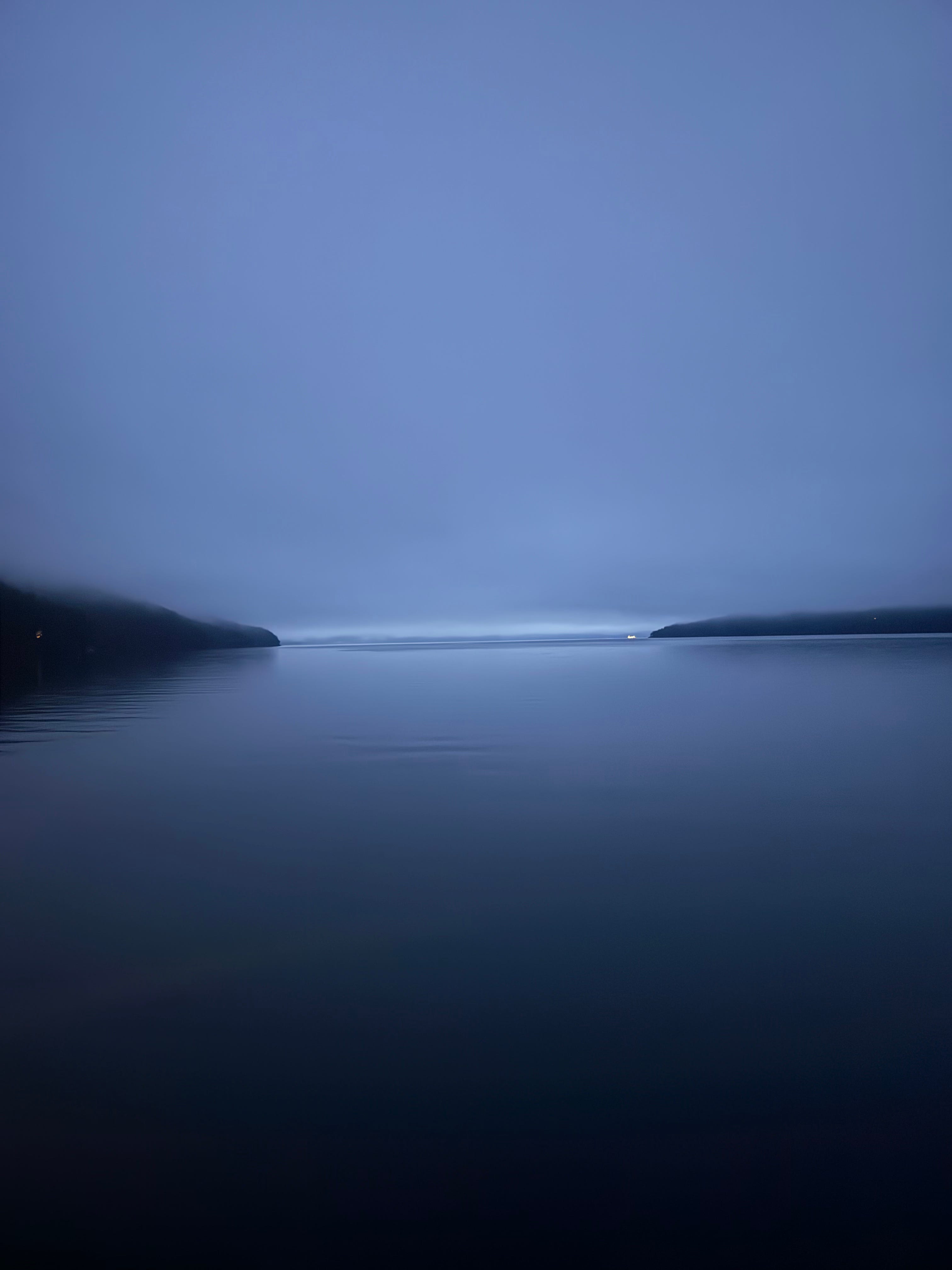
I left the retreat changed and inspired by the people in that room and the land itself. Orcas Island, with its trees and water and quiet, rewired something in me. On the last morning, before our closing circle, I walked to the shore and cupped the cold water in my hands until my fingers ached. I brought them to my mouth and tasted the salt, as if I needed to take a piece of the island inside my body. It left an imprint on me like nowhere I’ve ever been. A kind of magic I know I’ll return to. One way or another, I’ll find my way back to the water. You’ll see.
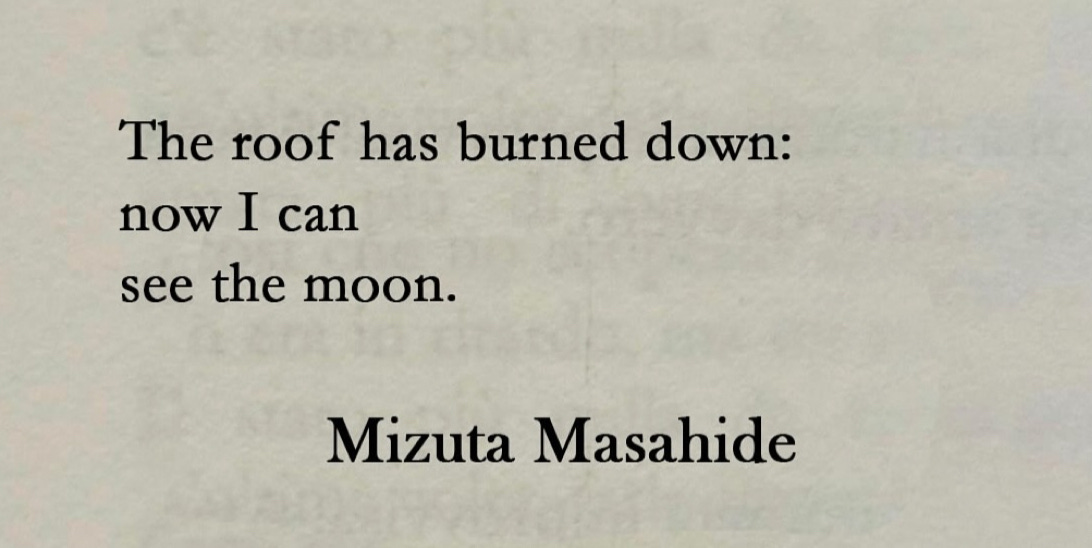
Maybe that’s just where I am right now—caught between an ending and whatever comes next. The month is closing, the retreat has settled into me in ways I’m still noticing, and the year feels like it’s finally letting out a long breath. I keep trying to make sense of it, to pin down what’s shifting, but maybe I don’t need to. Orcas showed me what it feels like to be fully present inside my own life, not rushing the moment, not trying to solve anything, not chasing the elusive “it.” So maybe this is the part where I stop trying to jump ahead and just let myself be here, in the in-between, long enough to see what’s actually asking to begin.
Seasons of Embodiment
Sitting in this liminal space has made me realize how much I need practices that bring me back into my body. I’ve been moving through Nourish Your Nature's Seasons of Embodiment path for autumn—simple, everyday rituals meant to reconnect you with nature and your own rhythms—and it’s been such a grounding anchor for me. I’ve really been leaning on it as I try to slow down and actually settle into whatever this next season is. It’s helping me meet myself where I am, not where I think I should be.
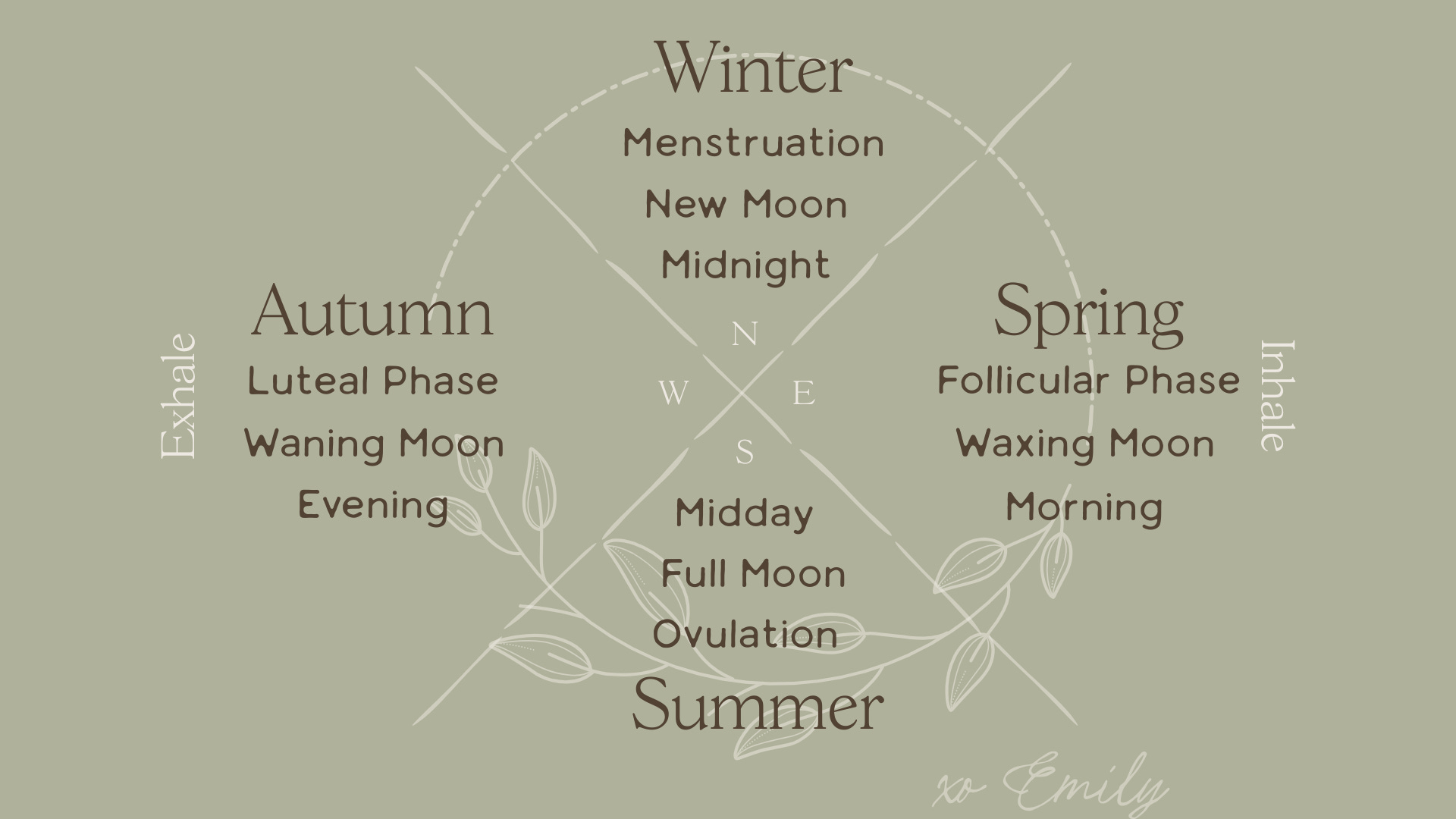
What I love about Emily’s work is that it feels like tending the soil, that quiet, beneath-the-surface work. It’s about rebuilding a sense of safety in my own body, learning how to feel the cues instead of sprinting past them. Most days, I start with her embodied listening practice—just looking around the room, letting my body register that I’m here, I’m safe, I’m allowed to slow down. It keeps bringing me back to how I felt on Orcas—present and unhurried, not trying to solve or plan my way through every single moment. This practice gives me a small doorway back into that feeling.
So while I’m sitting in this unsettling space between what ended and whatever’s coming, these grounding practices have been the place I return to. A way for me to shift from the outward push of the year into something more inward. For the first time in a long time, maybe ever, I’m letting my body set the pace.
If this is something you’ve been craving too, you can use JESSY10 for 10% off.
The Whole Writer Podcast
I had the honor of being on The Whole Writer with Nicole Meier last month, and it felt like opening a window in a room I’d kept shut for a long time.
We talked about how writing became a lifeline for me when I was a kid in the Mojave, and about what it really means to write the hard things, the ones we’re taught to avoid, to stay quiet about. We dove into how to honor your story without flattening the people in it, and how, for me, it’s always been about telling the truth with as much love as possible. My parents were deeply flawed and deeply loving at the same time, and I try to hold both truths in the book. Interviewing them and getting their perspectives in their own words helped me navigate the fear of hurting them, while staying honest about what their choices cost me.
We also talked about why I chose to serialize my memoir, The One Who Leaves here on Substack after nearly a hundred rejections, and how sharing my story in real time has changed the way I relate to it. Readers write to me about their own pasts, their own ghosts, their own hard things, and how reading my story is helping them process their own. That kind of connection is what led me to create the Fear-to-Flow Framework and begin teaching somatic writing workshops so others can write the hard thing without losing themselves in the process.
This conversation was empowering for me, not just as a writer, but as someone who has moved through a lot of darkness and somehow made something out of it. Nicole holds space with so much presence and care, and her questions pull you into yourself instead of away from it. To have someone reflect your work, your gifts, and your voice back to you is such a moving experience. Thank you, Nicole, for creating that space for me and seeing the power in my story.
If you’re writing through your own past, or trying to find the courage to begin, I think you’ll get something out of this one.
SHOP SMALL
We started Rhodes Wedding Co. over a decade ago as a way to connect with people and their love stories, to build a life centered around art and devotion, and the stories we get to hold. It was never about fashion or trends or chasing a quick buck. But it is our livelihood now—how we support our family.
Running a small business means every piece we make carries a little of our actual life inside it. I’m talking late nights at the workbench, my husband bent over a wax carving while also keeping an ear on the baby monitor for our sleeping son; the way our weeks bend around stone sourcing, casting schedules, photographing new pieces, packing orders at the kitchen table after dinner. Every order is wrapped and sent out with the kind of care you can’t automate. When you shop small, you’re supporting that rhythm—the real humans behind the work.
And the truth is, small businesses like ours survive entirely on community. We don’t have a marketing department or a warehouse or investors waiting in the wings. We have the people who choose slow-made art over fast fashion. When you buy from us, you’re not padding a corporation’s quarterly earnings. You’re making it possible for two artists to keep building a life out of creativity and love. You’re showing our son that making things with your hands, like really making them, is still a worthy way to move through the world. Your support ripples in ways you may never see, but we feel it every single time an order comes in.


So anyway, November’s been busting my ass to get our shop small sale ready. It’s our only sale of the year, a way for us to make our pieces more accessible beyond the custom engagement rings we’re known for. Perry has been in the studio late most nights while I’ve been doing everything else that brings a collection to life—photographing, writing, planning, organizing, building the launch, trying to keep the whole thing stitched together between school drop-off and dinner.
This year’s collection has necklaces and earrings and all kinds of sculptural rings—pieces that feel like a little extension of our hearts. And it feels really good to finally release them into the world. To hold the hope that they’ll find the people they’re meant for, that something about them will land at the right moment in someone’s life. A small offering of intention at a time of year that can feel rushed and overwhelming. Thank you for supporting us—for caring about the hands behind the work, for showing up for a family business built on love and devotion to craft. Rhodes keeps going because of you.
A Bright Ray of Darkness
I’ve been meaning to tell you about A Bright Ray of Darkness by Ethan Hawke. (Tell me that’s not one of the most beautiful book titles you’ve ever heard.) I chose the audiobook, which I almost never do, but he reads it himself, and it’s worth it for his voice alone. It doesn’t feel like an audiobook so much as a performance, the kind that makes you forget you’re supposed to be doing something else. He shifts through every voice, every wound, every wild, searching moment of the story, and somehow pulled me out of the creative slump I didn’t realize I’d sunk into.
The novel follows a young actor whose marriage is blowing apart while he’s trying to hold himself together onstage in Henry IV. People say it brushes up against autobiography, which, yeah, it probably does, but that wasn’t the part that got me. What I loved was how unapologetically it follows the creative impulse, the devotion to art for its own sake, the longing to make something true even when the rest of your life feels like a burning house. I mean, ugh, isn’t this the whole point? He writes about the hunger to create in a way that feels almost past-life like something he’s lived a thousand times over.
The only note I really had for the book was the way he writes women. They’re flat in that very Kerouac way. You know the way… where women are only mothers, muses, or women who hate him or want to fuck him. Their most notable traits are physical. Specifically, tits. But whatever. It didn’t ruin the book for me. The whole thing felt alive and sweaty and surprisingly tender. Some people had shit to say about the sex scenes, but man, give me all of Ethan Hawke’s gritty, over-the-top, slightly ridiculous, cum-splattered sex writing. Especially in his voice. I devoured it.
He’s been one of my favorite actors for years, and the Before trilogy still shapes how I travel through the world, how I listen, how I pay attention, how I carry myself in conversations that feel like portals. So hearing him narrate his own searching, seeking, self-reckoning novel felt like sitting beside someone who has spent his whole life trying, like really trying, to make something beautiful and true out of his darkness.
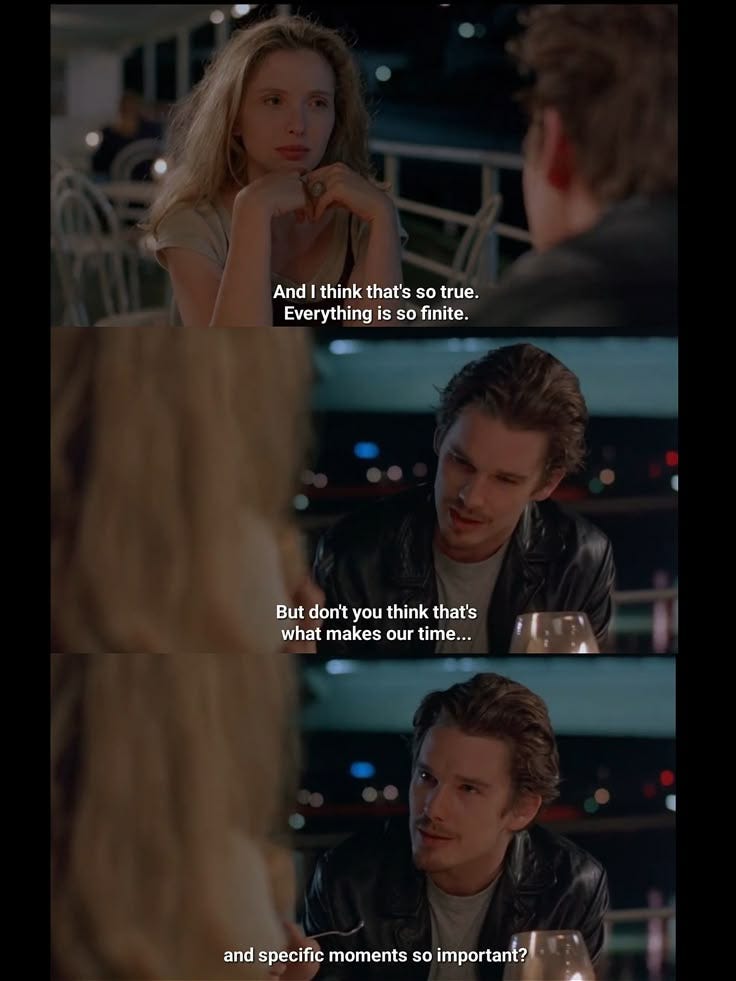
What always brings me back to him and his work, though, is the way he talks about creativity. Like how he says art is sustenance and human creativity is nature manifest in us, which feels so raw and true in a way that hits the body before the mind. You fall in love, you lose someone, you can’t sleep, you’re on your knees wondering if anyone has ever felt this goddamn sad or this alive or this scared, and the only thing that meets you there is art.
It’s met me there a million times.
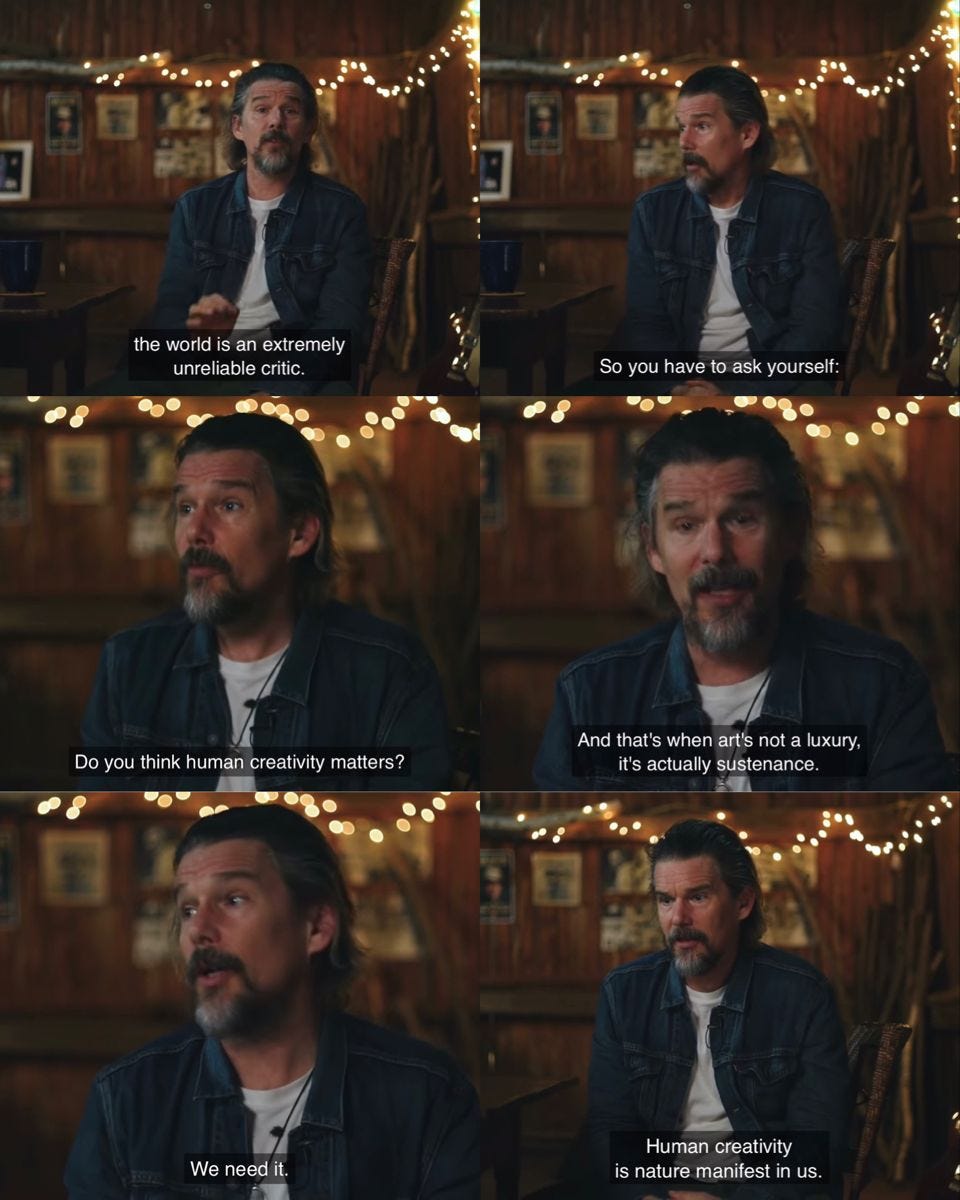
And then there’s his call to play the fool, to risk being misunderstood, to do the thing you love even if you aren’t sure anyone will think it’s good. Listening to him read this book felt like being handed the antidote to that fraud feeling that shadows me every time I sit down at the page. His voice kept reminding me of the simplest, hardest truth—if you want to live a creative life, you have to choose the next honest move, even if you feel a little stupid doing it, even if the world tells you no, even if you have no idea where it leads.
In the end, I think it’s just taking one small step toward the thing you love. And then another.


Doe Bay is such a special place. I grew up in Seattle and would escape and write in the orcas islands for a few days at a time. It’s one of the things I miss most about the PNW. Thank you for your beautiful words and pictures.
There is magic on that island. I loved getting lost inside this piece. You’re a gift.